
Reported by Nina Siegal
(Summarized version featured below)
The Van Gogh Museum’s role in authenticating artworks has come under scrutiny as collectors, such as Stuart Pivar, challenge its authority. Pivar, a seasoned art collector, claims to own a lost van Gogh painting, Auvers, 1890, but the museum rejected his claim, leading him to file a $300 million lawsuit, which was later dismissed. The museum’s opinion carries immense weight in the art world, as major auction houses like Christie’s and Sotheby’s often require its validation before selling a van Gogh. However, responding to a surge in authentication requests, especially during the COVID-19 pandemic, has strained the museum’s resources and made it increasingly reluctant to engage in such assessments. This hesitancy is partly due to the broader issue of art fraud, as forgeries of famous artists like van Gogh have become more sophisticated, making authentication even riskier.
The burden of authentication is not unique to the Van Gogh Museum. Other foundations, including those for Andy Warhol, Keith Haring, and Jean-Michel Basquiat, have withdrawn from authentication altogether due to the legal and financial risks involved. Art authentication has become a contentious field, with institutions wary of lawsuits that could consume significant resources. The rise of art fraud has exacerbated the problem, as forgers employ advanced techniques to create convincing fakes. Experts argue that while preventing fraudulent works from entering the market is crucial, the risks of litigation often outweigh the benefits of rendering an opinion. The Van Gogh Museum, despite its expertise, maintains that its opinions are not legally binding and can be revised based on new evidence.
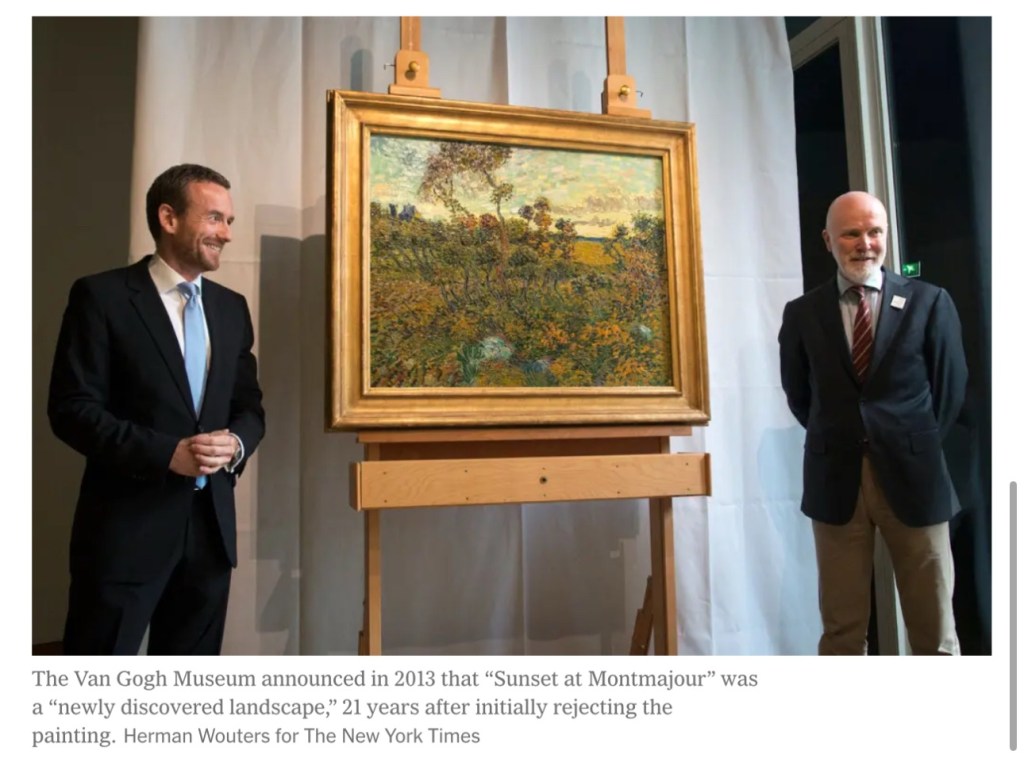
The complexity of authentication is evident in past cases where attributions have changed. For instance, the museum initially rejected Sunset at Montmajour in 1991 but later recognized it as an authentic van Gogh in 2013. Similarly, the museum revised its stance on Head of a Woman, once authenticated but later deemed a copy. Art fraud plays a significant role in such disputes, as fraudulent attributions can inflate the market and deceive collectors. German dealer Markus Roubrocks, who continues to challenge the museum’s authority over his rejected painting Still Life With Peonies, believes different experts might one day validate his work. However, without the museum’s endorsement, collectors often struggle to sell disputed pieces, highlighting the power of authentication in curbing fraudulent transactions.
Given the museum’s reluctance to authenticate artworks, independent scholars and emerging authentication firms are stepping into the void. Some, like LMI Group, use advanced scientific techniques and artificial intelligence to assess paintings. One such case involved a painting, Elimar, rejected by the Van Gogh Museum but later attributed to the artist by LMI Group using forensic analysis. These developments highlight a growing tension between traditional connoisseurship and modern technological approaches, as well as the increasing need to combat art fraud with objective, scientific methods. However, skeptics argue that new authentication firms may themselves create opportunities for fraud if their methodologies are not transparent or widely accepted.
Despite these challenges, the Van Gogh Museum continues to hold the highest authority in authentication, supported by its extensive archives and expert staff. While some critics call for a more collaborative and open approach, auction houses and major institutions still defer to the museum’s expertise. Pivar, frustrated by the rejection of his Auvers, 1890, remains determined to prove its authenticity, even considering alternative authentication methods. His case underscores the difficulties faced by collectors seeking recognition for disputed artworks, as well as the evolving landscape of art authentication in the face of legal, technological, and fraud-related pressures.
Read full version: https://www.nytimes.com/2025/03/16/arts/design/van-gogh-museum-authentication.html
 Financial Crime News Briefs