
Reported by Quentin Sommerville
(Summarized version featured below)
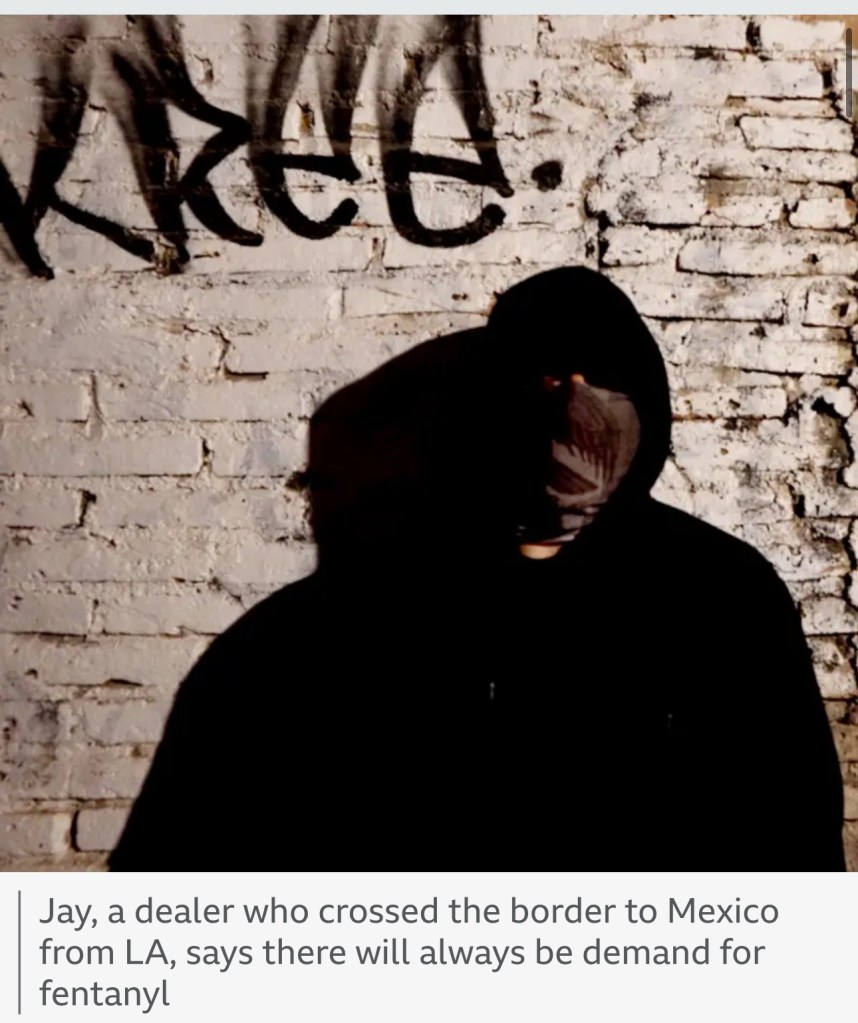
The BBC article by Quentin Sommerville explores the fentanyl trade between Mexico and the United States, highlighting its devastating impact on American communities and the broader geopolitical implications. It begins by providing rare access to a Mexican cartel’s fentanyl smuggling operation, where traffickers hide pills inside a vehicle’s fuel tank before sending them across the U.S. border. The cartel members acknowledge the deadly consequences of their trade but show little remorse, believing the demand will persist regardless of enforcement efforts. The article follows a U.S.-based dealer named Jay, who distributes large quantities of fentanyl weekly, confirming that the market is thriving despite attempts to curb the flow of narcotics.
The article then shifts focus to U.S. policy, particularly former President Donald Trump’s tariffs on Mexican goods, which were partly justified as a response to illegal drug trafficking. Despite these measures and vows to dismantle cartels, the fentanyl trade has continued, with dealers like Jay expressing skepticism about the effectiveness of government intervention. The abundance of the drug has even caused prices to drop significantly in cities like Los Angeles. Mexican authorities have attempted to crack down on cartels, seizing record amounts of fentanyl and extraditing high-ranking criminals to the U.S. However, the production and smuggling methods continue to adapt, keeping the supply chain intact.
The report highlights the deadly impact of fentanyl on American society, where opioid overdoses have become a leading cause of death. Efforts to combat the crisis include increased distribution of Naloxone, a drug that reverses opioid overdoses, which has contributed to a slight decline in fatalities. The article notes that Mexican President Claudia Sheinbaum has acknowledged the crisis but argues that the U.S. bears responsibility due to the history of opioid overprescription. Additionally, the Mexican government has cooperated with U.S. agencies, allowing expanded surveillance operations to identify drug labs.
In Kensington, Philadelphia, a community ravaged by fentanyl addiction, the article follows Rosalind Pichardo, an activist who has saved thousands of lives using Naloxone. She documents overdose reversals in a Bible and describes the harsh reality of addiction, where people use drugs openly in the streets. The article depicts the suffering caused by the epidemic, with users developing severe infections due to the presence of Xylazine, an animal tranquilizer mixed with fentanyl. Many, including longtime addict John White, describe fentanyl as more destructive than any previous drug crisis.
Ultimately, the report questions the effectiveness of the “war on drugs,” as new substances continuously emerge to replace those restricted by authorities. Pichardo and others express little hope that shutting down fentanyl from Mexico will resolve the broader addiction crisis in the U.S. The demand for powerful drugs remains high, and traffickers will always find new ways to supply them. The article closes with a somber scene: Pichardo revives yet another overdose victim outside her drop-in center, adding another number to her growing tally of lives temporarily saved.
Read full report: https://www.bbc.com/news/articles/cy5ng663d1wo.amp
 Financial Crime News Briefs