
Reported by Martin Sandbu
(Summarized version featured below)
The article examines the potential consequences of the United States changing its sanctions policy toward Russia under President Donald Trump. Traditionally, the U.S. has used a structured system of economic sanctions to cut off targeted nations from the global economy. However, Trump’s preference for tariffs—taxes on imports—marks a major shift from this approach. This change raises concerns about the predictability and effectiveness of U.S. economic diplomacy, especially regarding Russia, where existing sanctions have been a joint effort among Western allies to pressure Moscow over its actions in Ukraine.
Lael Brainard, former director of the U.S. National Economic Council, highlights the arbitrary nature of the Trump administration’s tariff policies, contrasting them with the careful application of past sanctions. Within the administration, there are discussions about using American economic power to reshape the global economy. Proposals include challenging other countries’ tax policies, selling off government gold reserves, and pressuring nations with large U.S. dollar holdings to convert them into long-term, low-interest bonds. Brainard expresses skepticism about these ambitious plans, arguing that the administration’s trade policies lack clarity and could cause significant economic disruption.
The article outlines three main economic measures against Russia: limiting its export earnings (such as the oil price cap), restricting its imports (especially military and dual-use goods), and imposing financial sanctions that block access to Western banking systems. The coordination between the U.S. and Europe has been key to enforcing these sanctions. However, if the U.S. were to lift sanctions unilaterally, Europe’s ability to maintain them effectively would be in question. While Europe could legally continue sanctions, their impact would likely weaken without U.S. participation, particularly in areas where American influence is essential.
Europe’s ability to enforce sanctions independently varies across sectors. When it comes to restricting Russia’s access to strategic imports, European efforts may be undermined without U.S. cooperation, as alternative suppliers could step in. On the other hand, Europe holds significant leverage over Russian exports, especially in commodities like natural gas and oil, due to geographic and infrastructural factors. The article points to the oil price cap policy, where Europe’s dominance in shipping and insurance services has been more effective in limiting Russian oil revenues than direct U.S. import bans.
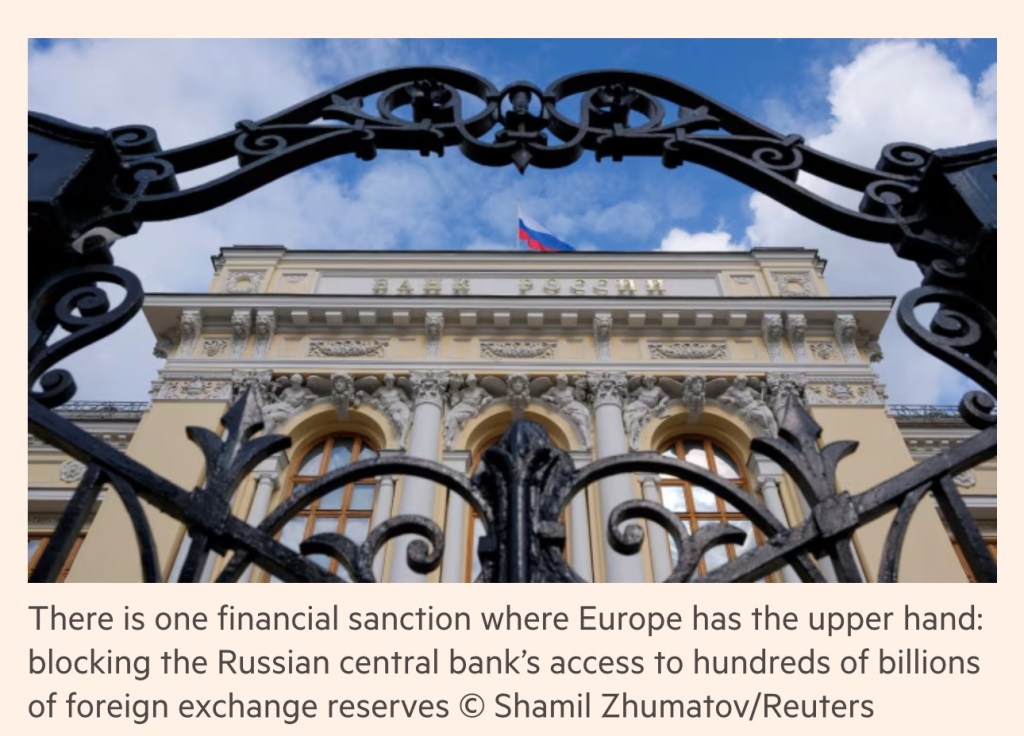
Financial sanctions are an area where U.S. dominance is particularly strong, given the central role of the U.S. dollar in global transactions. Being cut off from the American financial system is a severe penalty for sanctioned entities. However, Europe still has substantial leverage over Russia’s foreign exchange reserves, particularly the nearly €200 billion held in Euroclear Bank in Belgium. The article suggests that Europe should reconsider its stance on using these assets to compensate Ukraine for war damages. Taking decisive economic action could strengthen Europe’s position in negotiations and reinforce its commitment to supporting Ukraine.
Read original version via: https://www.ft.com/content/29799337-cbad-4b11-823a-a2fd6ee38ec0
 Financial Crime News Briefs