
Reported by Jenna Benchetrit – CBC News
(Summary version featured below)
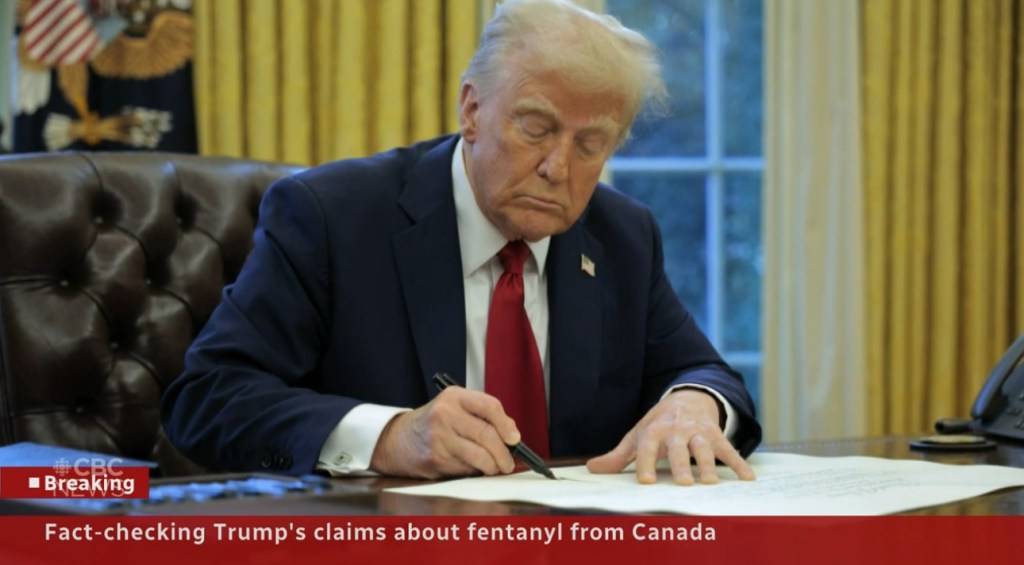
The Canadian federal government is planning new measures to combat organized crime, particularly money laundering, which has allowed fentanyl cartels to establish themselves in the country. The U.S. has expressed concern about fentanyl entering its borders from Canada, with former President Donald Trump citing the issue as a justification for potential tariffs. Although Canada accounts for only 0.2% of fentanyl seizures at the U.S. border, the country has transitioned from being primarily a consumer and importer to a producer and exporter of the drug. Organized crime groups exploit weak money-laundering enforcement in Canada, using financial loopholes to fund their operations.
Money laundering is deeply tied to fentanyl trafficking, with criminals using banks, real estate, and casinos to clean drug profits. Canadian crime groups are connected to international networks supplying precursor chemicals, enabling large-scale fentanyl production. This overproduction leads to fentanyl spilling into the U.S., making Canada an attractive location for drug traffickers. Being part of a free-trade zone historically reduced their risk of detection, further incentivizing operations within Canada. The issue has drawn increasing scrutiny as policymakers seek solutions to disrupt these networks.
In response to U.S. pressure, Canada has announced measures such as appointing a fentanyl czar, designating drug cartels as terrorist organizations, and increasing border surveillance. These steps aim to address the financial backbone of fentanyl operations rather than focusing solely on individual drug seizures. Strengthening enforcement against money laundering will be crucial in dismantling the financial infrastructure that allows fentanyl production and trafficking to thrive.
The Canadian government has begun taking stronger enforcement actions, as seen in the recent bust of the largest fentanyl “superlab” in the country. Additionally, proposed legislative changes include increasing penalties for money laundering violations to at least $20 million per offence. Revisions to the Proceeds of Crime (Money Laundering) and Terrorist Financing Act are also being considered to strengthen oversight. Experts believe these steps are necessary to curb illicit financial flows that enable the drug trade.
Compliance professionals warn that “snow-washing”—a term for Canada’s pervasive money-laundering problem—remains a major issue. Criminals use fraudulent invoicing, shell corporations, and trade-based laundering techniques, while businesses often fail to report suspicious activity. Experts argue that Canada has historically lacked both the legal framework and resources to prosecute financial crimes effectively. However, the fentanyl crisis may serve as a catalyst for reforms, pushing authorities to modernize anti-money laundering enforcement and impose stricter penalties on violators.
Read full report: https://www.cbc.ca/amp/1.7450357
 Financial Crime News Briefs