
Reported by Socure
Download full version below:
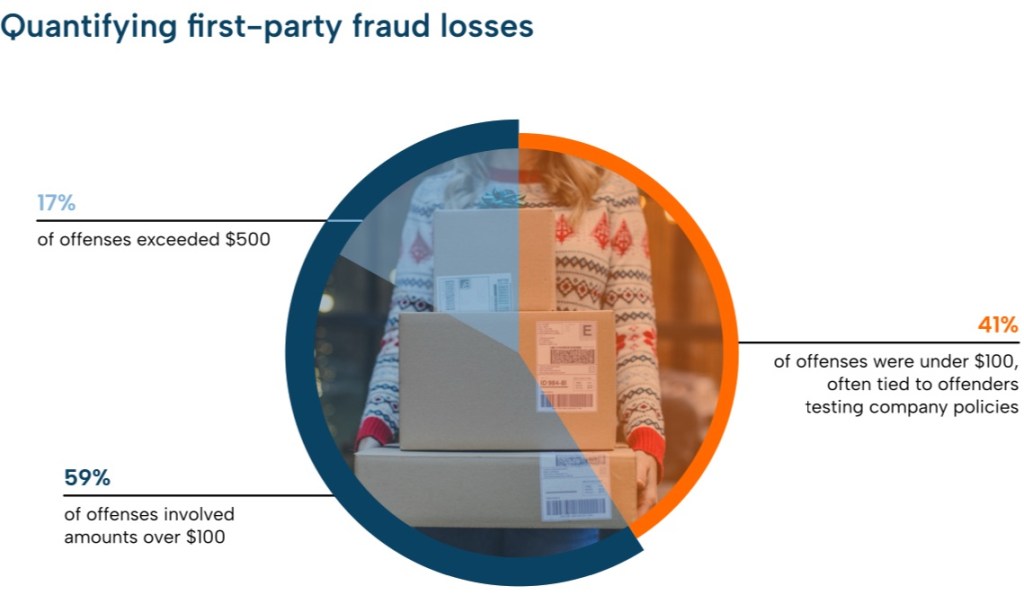
The white paper sheds light on the growing prevalence and complexity of first-party fraud, particularly during the holiday season. This type of fraud, often termed “friendly fraud,” involves consumers manipulating return and refund policies for financial gain. The white paper estimates the financial impact to be over $103 billion in losses in 2024, encompassing fraudulent claims, chargebacks, and operational inefficiencies. The holiday season exacerbates this trend, with lenient policies, economic pressures, and gift-giving stress creating a fertile environment for fraud.
Economic and psychological triggers are identified as key drivers of first-party fraud in the white paper. Approximately 60% of offenders cite financial struggles such as inflation and rising interest rates as their primary motivation. Moreover, 43% report committing fraud due to purchase regret, and nearly half of holiday offenders repeat fraudulent activities after prior success. The white paper also highlights the generational divide, with Gen Z and Millennials disproportionately engaging in first-party fraud, often rationalizing it as acceptable behavior against large corporations.
The white paper explores generational and socioeconomic patterns in fraudulent behavior. Younger consumers are not only more likely to commit fraud but also to justify it, with Gen Z and Millennials leading holiday-related fraud. High-income shoppers are twice as likely as low-income consumers to exploit lenient return policies. Seasonal stress amplifies these trends, with false “porch pirate” claims increasing over threefold during the holidays, further complicating the issue for businesses.
Beyond financial losses, the white paper underscores the broader impact of first-party fraud on trust and operational efficiency. Retailers face costs up to 3.75 times the value of disputed transactions due to chargebacks and associated overhead. “Revenge fraud,” where consumers retaliate against businesses for billing errors by disputing legitimate charges, further erodes relationships and complicates operations during peak shopping periods. These challenges emphasize the need for more effective deterrents.
The white paper advocates for advanced fraud prevention solutions to address the issue. It emphasizes leveraging technologies like AI and real-time data sharing to detect and mitigate fraud without compromising customer trust. The Socure platform is highlighted as an example, using a consortium model to pool data, identify repeat offenders, and reduce financial risks at scale. By adopting these strategies, businesses can better safeguard their revenues and customer relationships, especially during high-risk seasons like the holidays.
 Financial Crime News Briefs