
Reported by Chanyaporn Chanjaroen and Cliff Harvey Venzon
(Summary version featured below)
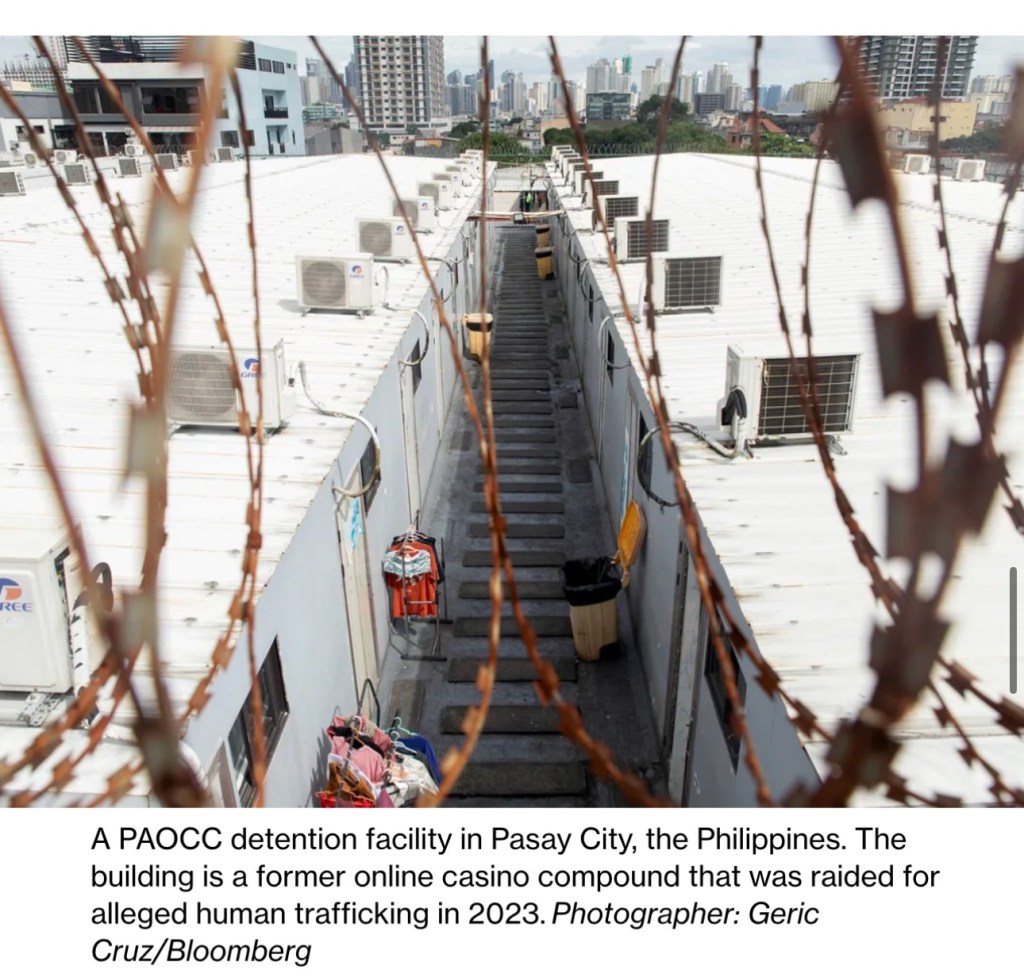
The case of Alice Guo, the former mayor of Bamban, Philippines, highlights the deep entanglement between money laundering, transnational crime, and the online gambling industry in Southeast Asia. In February, a raid on a compound in Bamban uncovered over 600 people from seven countries, detained and forced to commit internet scams. The compound, owned by Guo and her business associates, included underground tunnels and facilities for the company’s executives, underscoring the organized nature of these operations. Investigators linked the case to transnational organized crime, with public corruption playing a key role. Guo’s associates were previously convicted in Singapore’s largest-ever money laundering scandal, revealing financial flows of over $200 million through accounts tied to her.
The proliferation of Philippine Offshore Gaming Operators (POGOs), initially established in 2016 to tap into the regional gambling market, created an avenue for large-scale criminal exploitation. The industry became a hub for money laundering, people smuggling, and drug trafficking, with many operations acting as fronts for scam centers. Guo’s case exemplifies the sector’s vulnerabilities, as her licensed casino in Bamban doubled as a scam operation. These issues pushed the Philippines onto the Financial Action Task Force’s (FATF) gray list, which increases scrutiny on its financial institutions and affects overseas remittances, vital for millions of Filipinos.
Guo’s financial dealings underscore the scale of money laundering involved. She controlled over 30 bank accounts with annual transactions vastly exceeding the capital of her businesses. Investigations revealed links to Chinese criminal syndicates, including associates implicated in Singapore’s $2.2 billion money laundering scandal. Authorities also discovered ties to drug trafficking, highlighting the interconnection between financial crimes and broader illicit activities. Despite these revelations, Guo maintained her popularity among Bamban residents, many of whom credited her with local development and assistance during the COVID-19 pandemic.
The crackdown on POGOs, announced by President Ferdinand Marcos Jr., reflects the government’s attempt to curb criminal networks infiltrating the sector. By January 2025, the ban had led to raids uncovering thousands of illegal operations, although enforcement remains challenging in a country with widespread poverty and inequality. While the Philippines plans to exit the FATF gray list and bolster its regulatory framework, illegal gaming syndicates continue to evolve, shifting operations to remote sites and smaller venues, further complicating enforcement efforts.
Guo’s case represents a broader systemic issue of corruption and criminal exploitation in the region’s gambling industry. Despite her arrest and ongoing investigations, transnational criminal networks originating in China continue to grow, leveraging online and physical casinos as vehicles for money laundering and fraud. These operations are increasingly recognized as powerful global organized crime networks, demonstrating the urgent need for international cooperation and stronger regulatory measures to combat these threats.
Read full report: https://www.bloomberg.com/news/features/2025-01-13/mystery-of-alice-guo-and-how-pogos-unleashed-transnational-crime-in-philippines?embedded-checkout=true
 Financial Crime News Briefs