
Reported by Patricia Cohen
(Summary version featured below.)
The article examines the effectiveness of sanctions imposed on Russia following its invasion of Ukraine in 2022, particularly as President-elect Donald J. Trump prepares to take office. Despite the extensive scope of these sanctions, which have targeted Russian banks, businesses, and individuals, questions persist about their impact and future role in negotiations. Trump has expressed skepticism toward sanctions and indicated a desire to end the war quickly, suggesting sanctions and military aid may become crucial bargaining tools in any talks.
Experts argue that while sanctions have not led to a swift resolution or the collapse of Vladimir Putin’s regime, they have significantly constrained Russia’s capacity to wage war. Restrictions on Russia’s access to the global financial system, including freezing $300 billion in assets and curtailing oil exports, have reduced its resources. These measures, combined with Europe’s shift away from Russian energy dependence, have put notable pressure on the Russian economy, evidenced by soaring inflation, high interest rates, and slower economic growth.
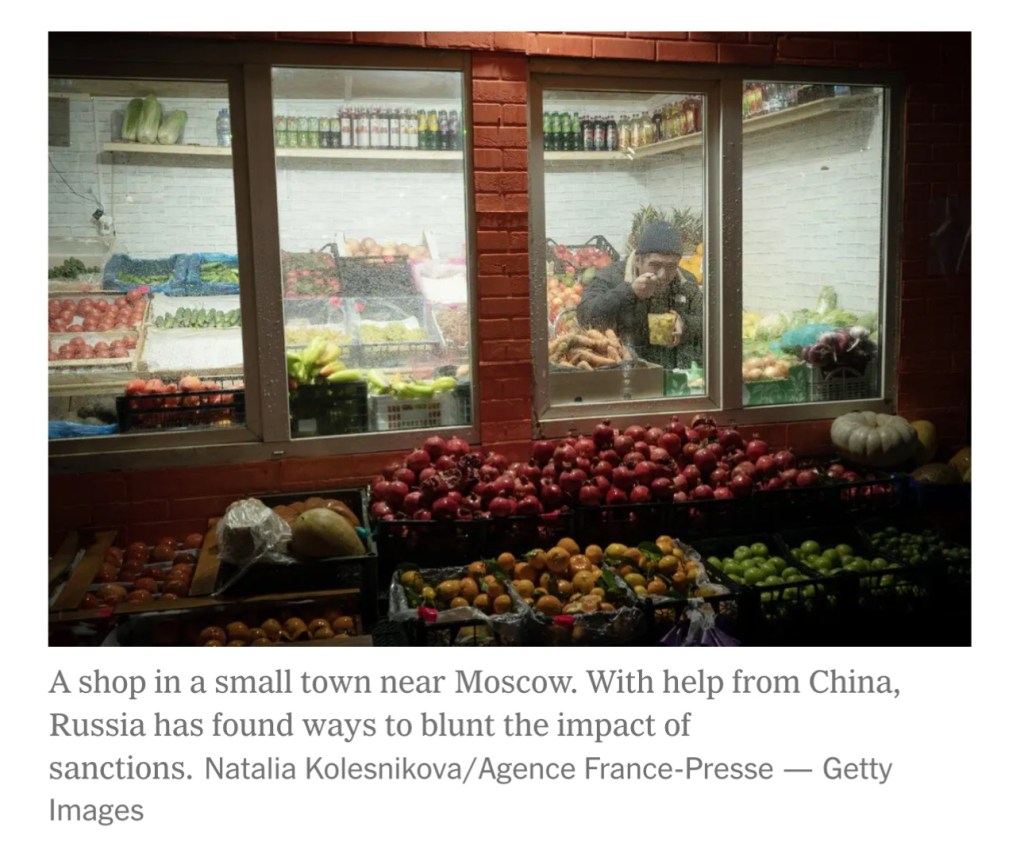
Nonetheless, Russia has found ways to mitigate the sanctions’ impact, with significant support from China and India. Both countries have increased trade with Russia, particularly in oil and essential materials, while Western goods continue to reach Russia through third-party nations like Turkey and the UAE. The development of a “shadow fleet” for oil transport and other strategies further illustrate how Russia has adapted. Critics argue that sanctions have been inconsistently applied and inadequately enforced, limiting their full potential.
The article highlights that U.S.-led financial sanctions, such as Russia’s exclusion from SWIFT, have been the most impactful. However, the decision to impose a price cap rather than a full ban on Russian oil exports allowed Moscow to maintain significant revenues. This inconsistency, coupled with concerns about energy prices and inflation, has softened the overall economic blow. Analysts contend that stricter and more cohesive measures could have tightened the noose on Russia’s war economy.
As Trump considers how to leverage sanctions in negotiations with Putin, their effectiveness as a bargaining chip remains uncertain. While sanctions have undoubtedly constrained Russia’s resources, they may not be enough to secure a settlement acceptable to Ukraine and its allies. The ultimate value of these sanctions depends on Putin’s willingness to compromise, which is influenced by Russia’s strategic goals and the evolving geopolitical landscape.
Read full report: https://www.nytimes.com/2025/01/02/business/economy/russia-sanctions-ukraine.html
 Financial Crime News Briefs