
Reported by Will Anderson, Chief Marketing Officer, Eastnets
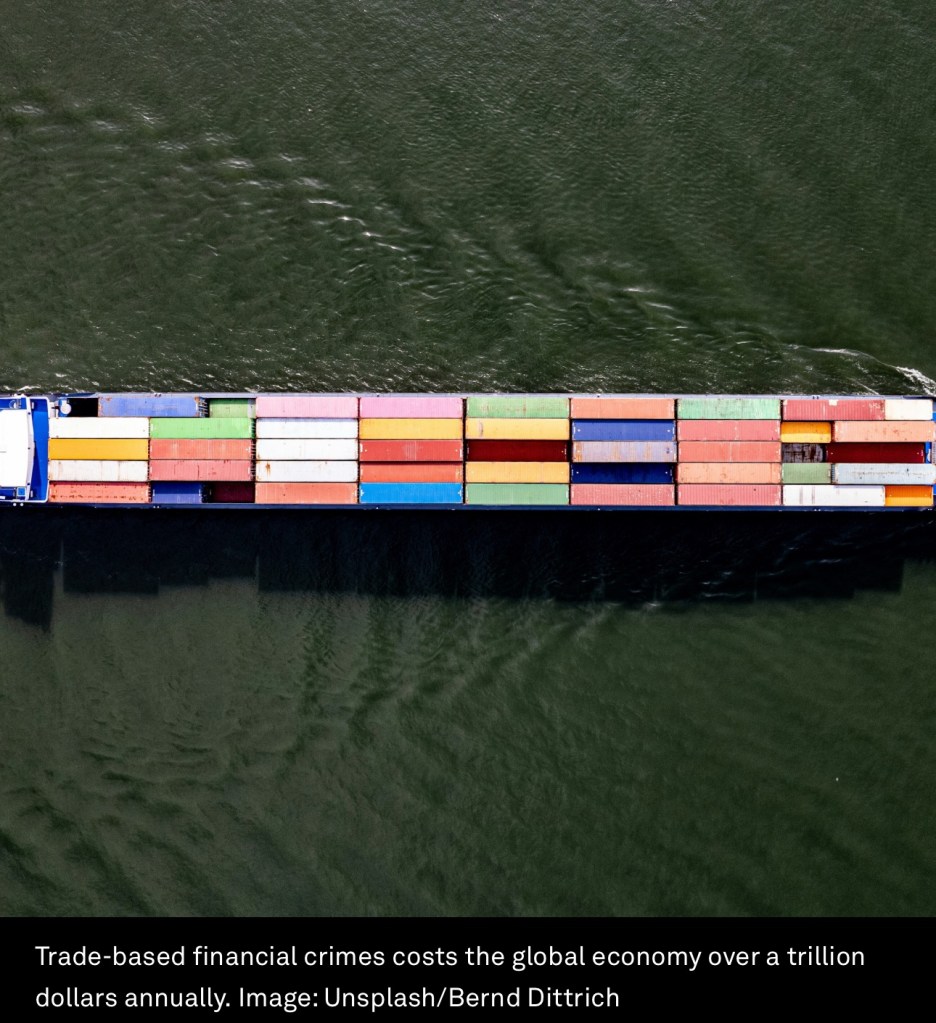
A large shipping vessel departs a Southeast Asian port, laden with electronics ostensibly worth $2 million. However, unknown to customs officials, the goods are deliberately undervalued, with the actual market value exceeding $10 million.
This classic example of under-invoicing, a hallmark of trade-based financial crime, allows criminals to siphon off $8 million in illicit funds through legitimate trade channels, masking their trail in plain sight. By the time the vessel reaches Europe, the fraudulent deal is complete and the money has already vanished into overseas accounts.
Trade-based financial crime is one of the most pernicious and underreported threats facing today’s global economy. With an estimated annual impact of $1.6 trillion – rivalling the gross domestic product of major economies such as Australia – it erodes financial systems, fuels illicit activities and stifles economic development.
Yet, despite its enormous cost, it continues to operate in the shadows, exploiting the very systems designed to facilitate global trade.
The growing complexity of trade-based financial crime
Eastnets’ recent report, Broken Inside, Broken Outside: The Global Fight Against Trade-Based Financial Crime, lays bare the scope of this threat. According to the report, financial institutions face significant challenges in combating trade-based financial crime, primarily due to internal fragmentation, regulatory complexity and lagging technology adoption.
Trade-based financial crime thrives on the complexity of global trade, where traditional methods of oversight fall short. Criminal networks exploit gaps between jurisdictions, fragmented financial systems and evolving regulations, making it nearly impossible for financial institutions to keep pace. The result? A growing threat to global financial stability.
Embracing AI and automation
The importance of technology in combating trade-based financial crime cannot be overstated. The Broken Inside, Broken Outsidereport reveals that 87% of institutions recognize the value of AI in detecting trade-based financial crime. Yet, many have been slow to integrate these technologies fully.
Fragmented internal systems and a lack of coordination have hampered the widespread adoption of AI and automation, exposing institutions to financial crime.
AI can sift through vast amounts of trade data in real time, uncovering patterns that human analysts might miss. More importantly, AI can go beyond mere detection, helping institutions optimize their trade processes, improve efficiency and enhance overall performance.
By adopting AI and automation, financial institutions can shift from a reactive to a proactive stance, identifying risks before they escalate.
Read full report: https://www.weforum.org/agenda/2024/10/unveiling-hidden-threat-trade-based-financial-crime/
 Financial Crime News Briefs