
Reported by Carter Pape
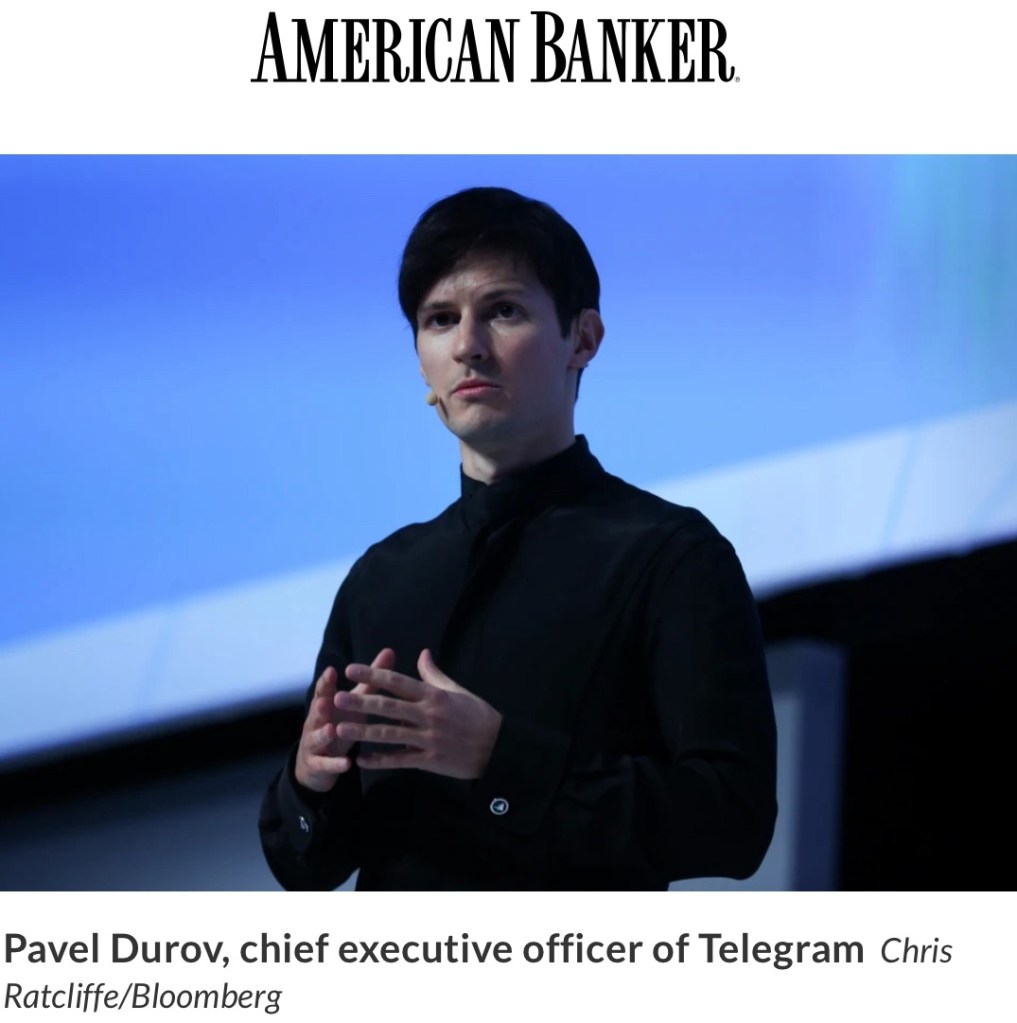
Telegram’s role in fraud and cybercrime
Telegram plays a “significant role” in enabling fraud and scams, according to Greg Williamson, senior vice president of fraud reduction for BITS, the technology policy division of the Bank Policy Institute. Specifically, the platform serves as a “how-to” channel for illicit actors to share information and recruit criminal partners.
“Check fraud is one type of fraud where the industry has seen significant activity on Telegram, with large-scale criminal actors sharing tactics they’ve successfully used to counterfeit and steal checks,” Williamson said.
American Banker has previously reported that fraudsters overwhelmingly turn to Telegram to recruit criminal partners in these schemes.
Old-fashioned check fraud is growing, and fraudsters find people to cash their checks — and tell them what to wear while doing it — through a popular messaging service.
“A fraudster who has a counterfeit or stolen check ready to be deposited uses Telegram to advertise their previous successful check deposits to entice other criminals who have open accounts to partner and provide them with access to those deposit accounts,” Williamson said.
Because Telegram serves as a forum for illicit actors to communicate and network with one another, Williamson said “shutting down a platform like Telegram wouldn’t eliminate fraud, but it would meaningfully disrupt existing networks and force fraudsters to change their approach.”
With respect to Telegram’s responsiveness to judicial warrants for data, Williamson said companies like Telegram “have a responsibility to American consumers to implement and enforce measures to detect and prevent illicit activities on their platforms.”
CSAM on Telegram
Telegram’s permissiveness has had far-reaching negative effects in CSAM in particular. In a report published last year by the Stanford Internet Observatory, researchers found that, while many social media and messaging platforms struggle to identify and shut down CSAM, Telegram uniquely fails to mitigate or even disallow the material on its platform.
The report highlights a section of Telegram’s terms of service, which states that by signing up for the platform, users agree not to “post illegal pornographic content on publicly viewable Telegram channels.” According to the report, this means Telegram is “implicitly allowing CSAM on its platform, provided it is shared in private groups or direct messages.”
In contrast, every other platform analyzed by the report at the time — TikTok, Snapchat, Discord, Twitter and Instagram — prohibits dissemination of CSAM on the platform and has publicly claimed to try to mitigate it.
Since the report was published in June 2023, Telegram has not changed its terms of service to address this or similar omissions identified by the Stanford report.
Read full report: https://www.americanbanker.com/news/telegrams-policies-permit-fraud-on-its-platform-and-worse
 Financial Crime News Briefs