
Reported by ELEANOR MYERS
In July 2020, Andrew Fahie, premier of the British Virgin Islands, wrote to the U.K. government boasting of transparency in its financial services industry that “competitors may envy.”
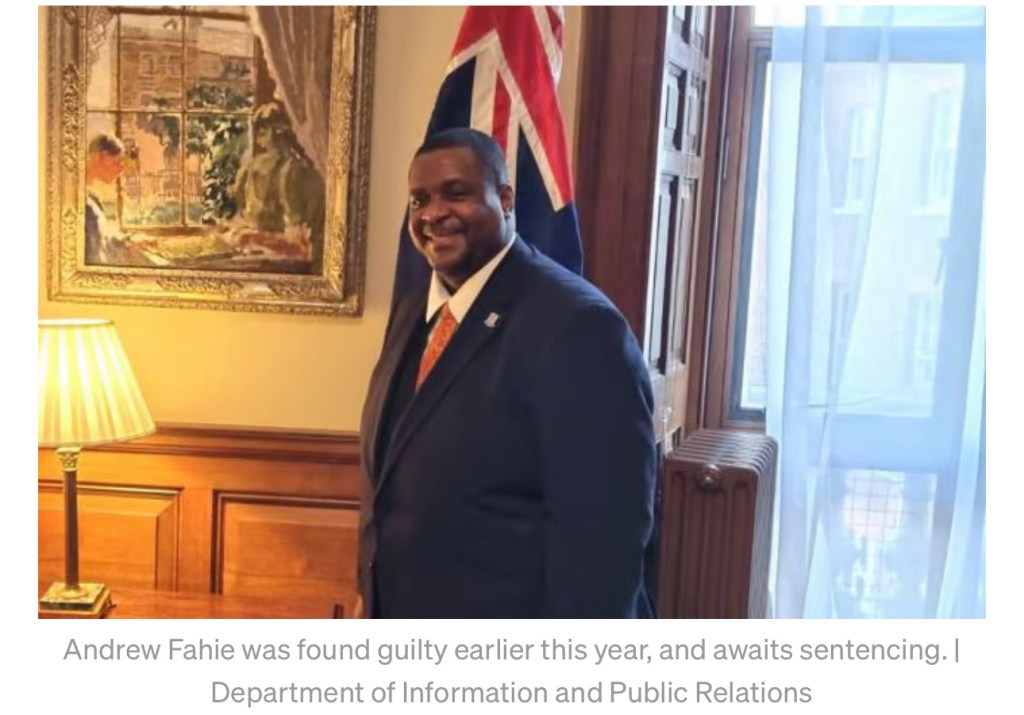
A publication detailing the letter shows a smiling Fahie alongside the proud message that the BVI “continues to meet and adhere to the highest international standards as a responsible, cooperative and quality financial centre.”
Less than two years later, Fahie was arrested by the U.S. Drugs Enforcement Agency in Miami on cocaine smuggling and money laundering charges. DEA agents had pretended to be members of the Sinaloa cartel — once run by famed Mexican drug lord El Chapo — to lure Fahie to the U.S, where he agreed to let them smuggle cocaine through the British Virgin Islands (BVI).
Fahie was found guilty earlier this year, and awaits sentencing.
For some, this dramatic tale is symbolic of the dirty money hotbed the BVI has become, enabled in part by the U.K.’s lack of action to prevent it.
“The Foreign Office, in my view, has not been tough enough,” said Conservative MP and Shadow Foreign Secretary Andrew Mitchell.
Mitchell, who served as deputy foreign secretary under the previous Conservative government and is a prominent campaigner against dirty money, said Fahie’s arrest “underlines the urgent requirement for the BVI to clean up its act, and prevent it from being accused of this sort of crime.”
The BVI, a Caribbean archipelago with crystal-clear waters, comprises four main islands and more than 50 smaller ones. It’s one of Britain’s 14 overseas territories. The “B” in its name stems from an uncomfortable history of British colonization: its residents are British citizens, its flag includes the Union Jack, and its sovereign is King Charles III.
So, it’s firmly a British issue.
“The reason why the BVI is British is because we took it from the people it belonged to and used it as a slave colony,” said Oliver Bullough, an author who writes about illicit finance. “The people in the BVI discovered how to make money through being a tax haven, and we allowed them to do so, because it meant that we didn’t have to pay to support them anymore.”
The BVI’s popularity as a sunny destination for tourists as well as for money laundering is now well established.
It hosts a financial services industry which greatly outsizes its local economy. Companies registered there hold $1.5 trillion in assets, in a country with a GDP of just over $1 billion.
More than 50 percent of the shell companies uncovered by the Panama Papers document leak in 2016 were registered in the BVI. An International Monetary Fund report from February accused the BVI of not providing evidence it is implementing sanctions. A Transparency International report from 2022found “endemic problems” with the BVI as the “destination of choice for corrupt individuals looking for secrecy.”
Plus, the International Consortium of Investigative Journalists revealed that BVI companies appeared in one in every five suspicious activity reports filed by banks that had concerns about possible money laundering.
While there are legitimate reasons to register a company in the BVI, the appeal of offshore financial centers is that they can offer opaque systems and few checks on the source of funds. Would-be criminals eye up “shell companies,” allowing them to disguise who actually owns an asset via a firm without active business operations or assets.
Read full report: https://www.politico.eu/article/virgin-islands-andrew-fahie-corruption-britain-tries-to-clean-up-its-dirtiest-secret/
 Financial Crime News Briefs