
Reported by Rabihah Butler Manager for Enterprise content for Risk, Fraud & Government / Thomson Reuters Institute
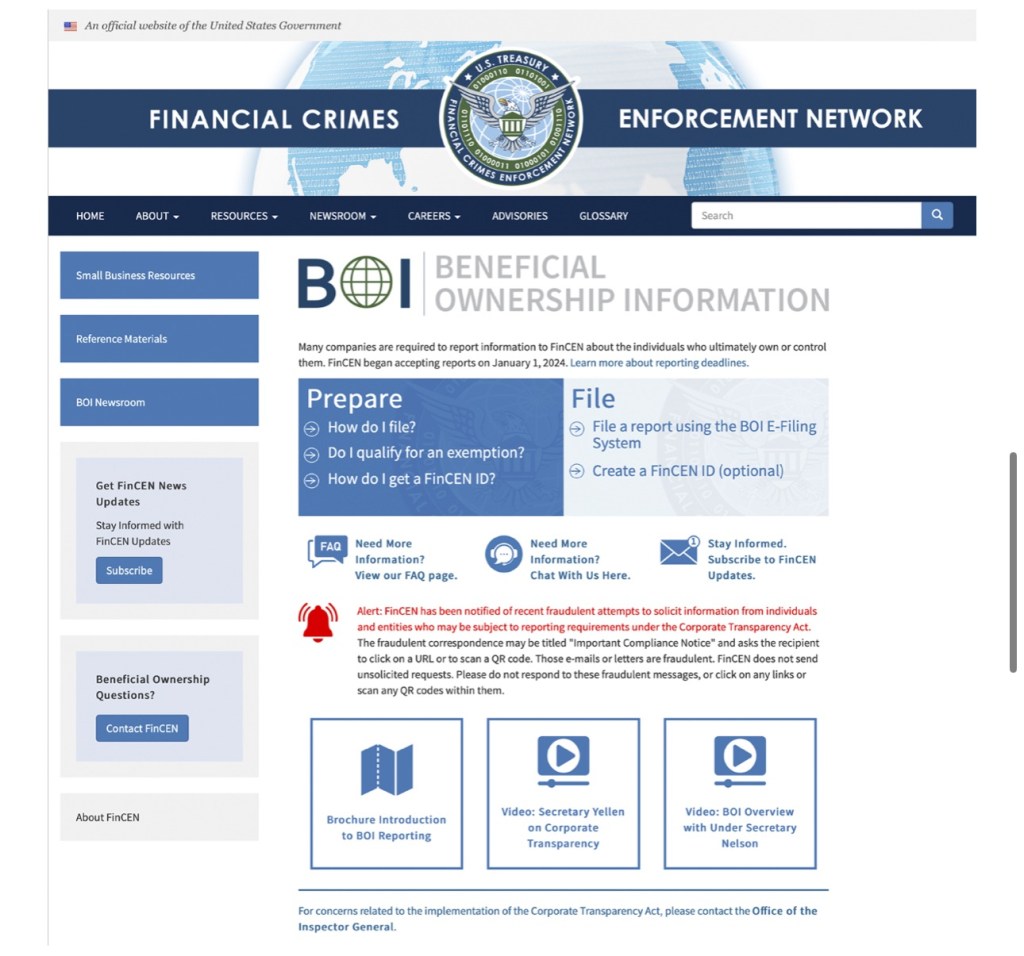
Before the Beneficial Ownership Information (BOI) Database went live, there were scams and rumors of scams surrounding the CTA and the database. These scams were so prevalent that FinCEN had to make an official alert to the scam before it was even able to open the database.
An opening for scammers
Indeed, the lack of widespread training combined with the lack of transparency in the opening of the BOI database is contributing to confusion, especially among smaller businesses. And as mentioned, it also creates opportunities for scammers to collect valuable information, especially from National Federation of Independent Businesses (NFIB) members, which may be more susceptible to sophisticated scams. Among the most pervasive scams are:
-
- Filing company scams — False companies can position themselves as intermediaries to file the form at a cost to the business owner. These fake intermediary companies not only get the initial fee but can sell personally identifying information on the black market. Often, they also fail to follow up on any obligations after the initial filing.
- False websites — Illicit actor set up websites that impersonate FinCEN, often copying even the stamps and logo. This gives the scammers access to businesses’ information. These sites also gain access to businesses’ information and never fulfill the obligation of the business to file.
- Threatening letters & emails — Letters or emails are sent out claiming to be from FinCEN or a fake government agency associated with FinCEN. These communications are often very threatening, and some of the more sophisticated letters use QR Codes that are a misdirection and can result in information being shared.
- Phone scams — Phone calls offering business help to file over the phone. The calls range from friendly reminders to threats of enforcement and, if successful, usually end with individuals’ information on the black market.
Read full report: https://www.thomsonreuters.com/en-us/posts/corporates/cta-constitutionality/
 Financial Crime News Briefs