
Reported by Olivia Dakeyne, Associate Director of Insight, Themis
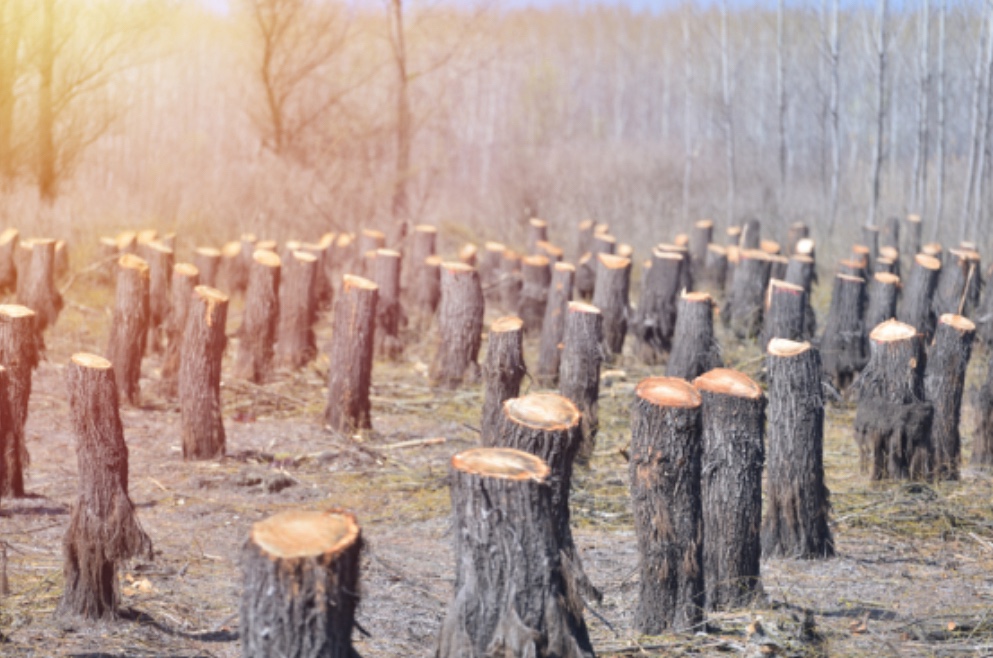
According to Global Canopy, US$6.1 trillion in funding was provided to the 350 companies with the greatest risk exposures to tropical deforestation by some 150 financial institutions in 2023. This is bad news for the financial sector—and the world at large—since deforestation is responsible for a range of devastating environmental and social impacts and poses a serious threat to global efforts to tackle climate change. Deforestation—covering the destruction, conversion or degradation of natural forests—is perhaps the most widely discussed form of land conversion (a broader term that covers land-use changes—for example, into agricultural land—across a range of different biomes, such as savannah, grassland and marshland, not merely forested, not merely forested areas).
Deforestation and land conversion: convergence with financial crime
Given these issues and the substantial environmental, social and governance (ESG)-related concerns, many financial institutions are already risk-assessing and attempting to limit their exposures to land-conversion-related activities. However, in addition—and as important to compliance teams as they are to ESG teams—land conversions, regardless of whether they are legal, frequently converge with an array of financial crimes (and, indeed, much activity occurs in grey areas between the two).
These financial crimes can actively drive, enable or converge with land conversion in numerous ways. Corruption and bribery, for example, widely underscore the activity—used to secure permits for land clearing that should not have been issued legally—as does fraud via the alteration or falsification of documentation, such as mis-invoicing, permit trading, trade-database hacking or fraudulent bills of lading that can conceal or misrepresent activities.
Not only are front companies used to evade taxes on land-clearing activities, but vast volumes of financial flows from high-secrecy tax havens actively fund land-conversion activities.Researchers have found that tax havens offer a major conduit through which investors can fund agribusinesses in tropical areas. For example, 68 percent of all investigated foreign capital flowing into nine of the top companies in the soy and beef sectors in the Brazilian Amazon rainforest was transferred through tax havens between 2000 and 2011.
A Serious and organised criminal activity
Confluence with serious, organised crime is also a key risk. Not only is land often cleared to make way for the cultivation of drugs, including marijuana, opium and cocaine, but also to build the infrastructure—such as airstrips, makeshift river ports and roads—necessary to transport narcotics through undeveloped areas. An even greater risk to firms, overlapping with commodity production, is that land is cleared to establish ranches, plantations and mines through which illicit proceeds from serious, organised criminal activity—often drug trafficking—are then laundered (think of the so-called “blood avocados” associated with Mexican drug-cartel activities). In Honduras, for example, the land is cleared by narco-traffickers in wetlands and mangrove swamps to produce palm oil to both legalise drug-trafficking income and legitimise the groups’ presence in areas traversed by trafficking routes.
Cattle can also be used to launder the proceeds of illicit activity. Drug traffickers—especially inColombia, Honduras and Guatemala––are known to launder revenue from drugs by buying or grabbing land, which they convert into pasture for cattle (also purchased with narco-trafficking proceeds). When the cattle are sold, it is difficult to trace profits back to the drug networks, and their illicit proceeds are effectively laundered. This practice, known as narco-ranching, is suspected of contributing up to 87 percent of deforestation in the Maya Biosphere Reserve, a large UNESCO (United Nations Educational, Scientific and Cultural Organization) heritage forested area covering more than two million hectares of rainforest across northern Guatemala and bordering other protected forests in Mexico and Belize.
Accompanying and feeding such laundering activities, transnational organised crime syndicates are rapidly diversifying their income streams across multiple environmental crimes, engaging in wildlife, drug, mineral and timber trafficking simultaneously. These goods often share the same transit routes, trading methods and shipping processes and move through the same geographical hotspots, ports and consolidation hubs. Indeed, criminal groups that previously operated in cities and urban areas and relocated to the Amazon to occupy drug-trafficking routes have since stayed to take advantage of the rainforest’s natural resources, such as gold and timber, which give them an even higher “growth potential”.
Indeed, in 2022, more than 320 illegal gold mines were counted in the nine states that make up Brazil’s Legal Amazon (Amazônia). Major drug-trafficking factions, including the Brazilian Primeiro Comando da Capital (PCC), haveinfiltrated mining operations in Indigenous territories, running protection rackets, extorting taxes, controlling pits and forging partnerships with gangs in neighbouring Venezuela to sell contraband minerals. In Colombia and Peru—the world’s largest producers of cocaine—the value of illegal gold exports now exceeds that of cocaine; this is perhaps unsurprising, given that gold can fetch almost twice the price of cocaine, ounce for ounce, thanks to a 360-percent increase in its value between 1990 and 2020.
Read full report: https://internationalbanker.com/finance/deforestation-as-much-a-financial-crime-as-an-esg-issue/
 Financial Crime News Briefs