
Reported by Laurence Norman and Georgi Kantchev
Two years after Russia’s invasion of Ukraine, Western sanctions have failed in their most important task—stopping the Kremlin’s war machine.
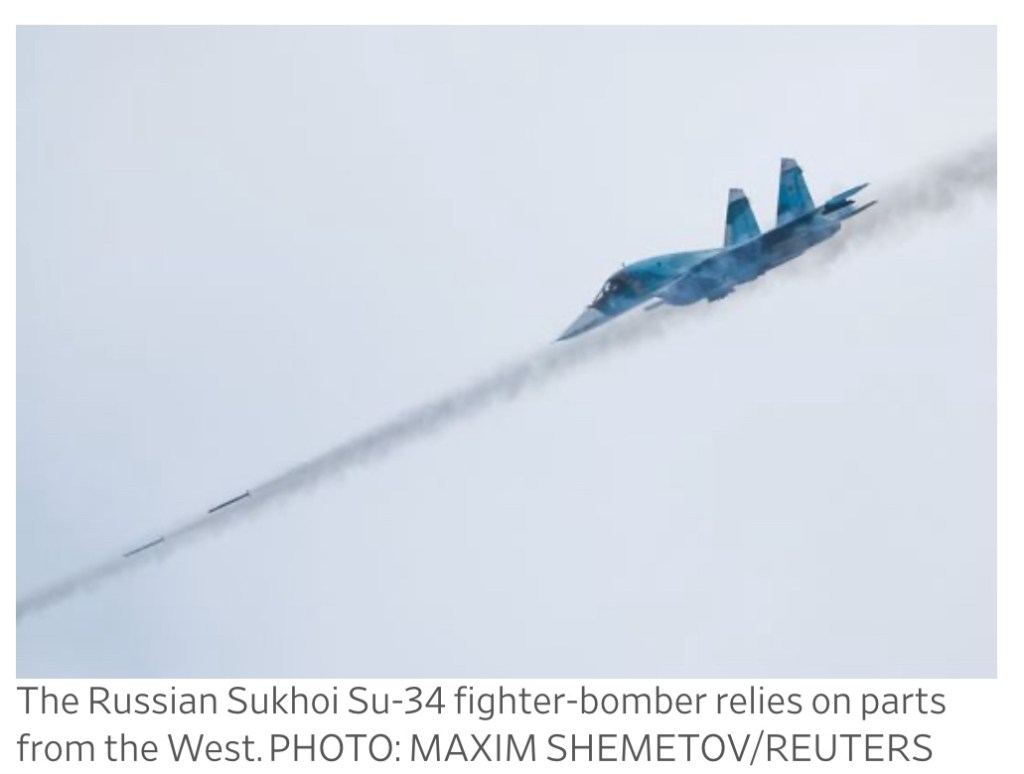
Russia has used shell companies and neighboring countries to buy components used in weapons. And it has obtained a large number of old vessels operating under opaque ownership to circumvent a Western-imposed oil price cap.
Moscow’s avoidance of sanctions has created an elaborate cat-and-mouse game. Western officials design measures to hurt Russia, but the Kremlin eventually adapts, forcing the U.S. and European policymakers back to the drawing board. It is a competition the Kremlin can’t afford to lose. Western officials believe Russia cannot produce enough ammunition on its own to achieve its aim of subjugating Ukraine.
However, with Ukraine on the defensive and U.S. support for Ukraine facing political opposition, sanctions haven’t prevented Russia from vastly increasing military spending this year.
Iran and North Korea have delivered drones and missiles to Russia, while China and Turkey have helped provide Moscow with a regular supply of Western-made dual-use goods its military depends on to conduct the war.
Unlike with past sanctions against Iran or North Korea, Russia’s economic weight has made it hard to isolate. So has the fact it exports not just oil and gas but resources including uranium and titanium that Western economies rely on.
U.S., British and EU officials have visited capitals around the world to persuade neutral countries not to undercut sanctions on critical military and dual-use goods. The effort has had some success in places including Central Asia but less with giant economies including India, Brazil and China, which have shunned sanctions on Russia.
Read full report: https://www.wsj.com/world/the-biggest-ever-sanctions-have-failed-to-halt-russias-war-machine-0986873f
 Financial Crime News Briefs