
Reported by Angus Berwick
The U.S. last year sanctioned a Moscow-based crypto exchange to stymie Russian efforts to evade the financial blockade imposed after the invasion of Ukraine.
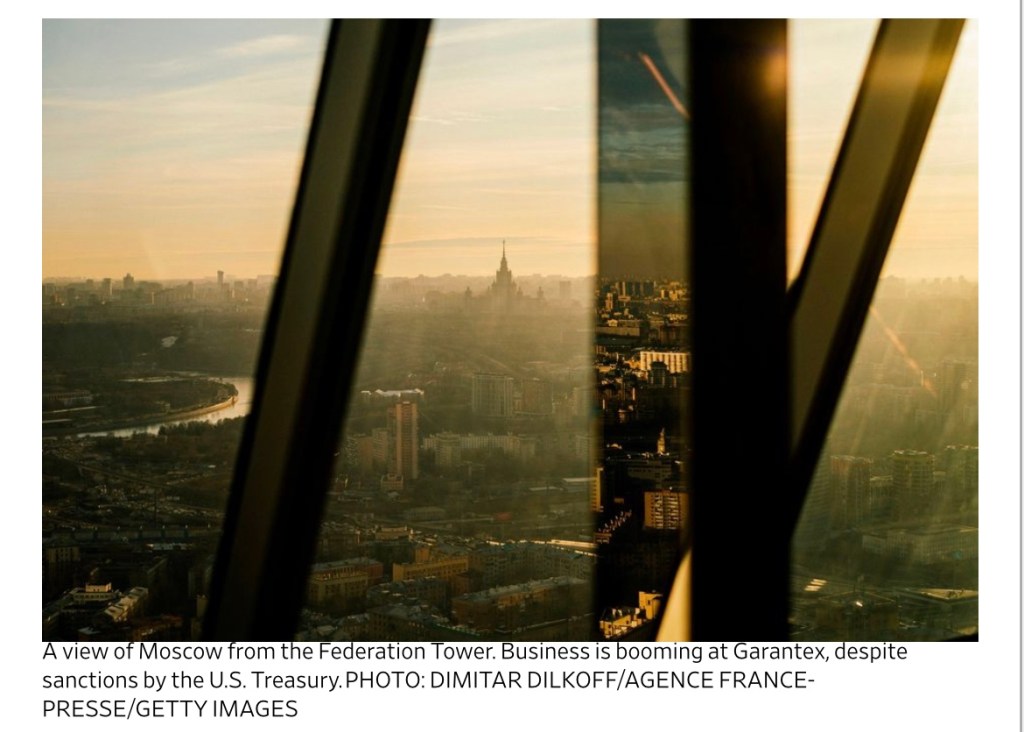
A year on, the exchange is booming.
Despite its place on the U.S. blacklist, which restricts transactions with sanctioned entities, Garantex has become a major channel through which Russians move funds into and out of the country, according to trading data and people familiar with the firm. It has also been a vehicle for Russian cybercriminals to launder their earnings, U.S. authorities say.
Garantex’s growing role as a global conduit for illicit funds was underscored this month by evidence that Palestinian militants in part financed their operations through crypto in the lead-up to the Oct. 7 attacks in Israel. Digital wallets controlled by Palestinian Islamic Jihad, which joined Hamas in the attacks, received a portion of $93 million via Garantex, according to analysis by researcher Elliptic, which said Hamas also used a similar financing strategy.
The U.S. Treasury, in a report last year, said gaps in financial crime controls at crypto exchanges can allow terrorist groups to misuse them. Israeli Defense Minister Yoav Gallant said last summer the use of digital currencies was making the job of stopping terrorist financing ever more complex.
In Russia, the exchange is used to move rubles into other currencies, which is more difficult amid sanctions on Russian banks after the invasion of Ukraine. Customers deposit rubles in cash at Garantex’s offices to receive crypto, primarily in the form of stablecoins, a popular type of digital currency often pegged to the U.S. dollar. These can then be withdrawn as traditional currency abroad from a network of local partners, with little trackable record of the transactions.
Customer transactions on the platform totaled around $865 million in July, more than triple what it processed the month it was sanctioned, according to crypto data provider Coinpaprika.
The numbers show how crypto has emerged as a major weak point in the Biden administration’s efforts to strangle Russia’s economy. The Treasury Department has sanctioned over 80% of the Russian banking sector, restricting how Russians can move money through foreign banks.
Crypto has become “an alternative method” to settle transactions and transfer funds, the Bank of Russia said this year.
Garantex’s expansion raises questions about the effectiveness of U.S. sanctions when targeted at entities that are financially insulated in a hostile territory, said Juan Zarate, a former senior Treasury and White House counterterrorism official. “It does suggest the limits of what OFAC can do,” said Zarate, referring to Treasury’s Office of Foreign Assets Control. “OFAC tools, though powerful, aren’t a silver bullet.”
A senior Treasury official told The Wall Street Journal the department was closely monitoring Garantex and was working with partners and allies to close it off as a payment channel. Treasury assessed that wealthy Russian individuals were often using Garantex to move money out of the country. The department is considering future action against actors that are using Garantex for cross-border transactions, the official said.
Read full report: https://www.wsj.com/finance/currencies/garantex-russian-crypto-hamas-crime-sanctions-a3648357
 Financial Crime News Briefs